Evaluating GINKGO LEAVES Seamless Digital Paper for Professional and Personal Design Projects
In the expansive world of digital design resources, selecting the right texture or pattern can define the aesthetic success of a project. Among the myriad options available, GINKGO LEAVES Seamless Digital Paper has emerged as a distinctive choice for creators seeking organic elegance combined with technical versatility. This resource is not merely a static image; it is a high-resolution asset designed to bridge the gap between natural inspiration and functional application. Understanding its specific attributes, resolution capabilities, and comparative advantages is essential for designers, scrapbookers, and entrepreneurs evaluating whether this pattern fits their current workflow.
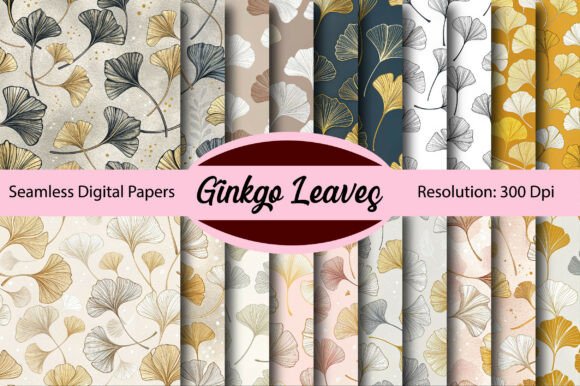
The core appeal of this digital paper lies in its subject matter and execution. The ginkgo leaf, with its unique fan shape and historical significance, offers a visual motif that is both modern and timeless. Unlike generic geometric patterns or overly busy floral arrangements, the ginkgo motif provides a structured yet fluid background that does not overwhelm foreground elements. When sourced as a seamless pattern, these leaves tile infinitely without visible breaks, creating a continuous surface that is critical for large-scale applications like wallpaper or fabric printing. The specific iteration discussed here boasts a resolution of 300 DPI (dots per inch), a standard that distinguishes professional-grade assets from low-quality web graphics intended only for screen viewing.
Technical Specifications and Format Considerations
When comparing digital papers, the technical specifications often dictate the range of possible applications. The GINKGO LEAVES Seamless Digital Paper described in this evaluation is provided in JPEG format at 300 DPI. This combination is significant for several reasons. Firstly, the 300 DPI resolution ensures that the image retains crispness and detail when printed on physical media. Whether you are producing high-end wedding invitations, packaging boxes, or fashion textiles, this density prevents pixelation and blurring, which are common pitfalls when using 72 DPI web images for print.
Secondly, the JPEG format offers universal compatibility. Almost every design software, from industry standards like Adobe Photoshop and Illustrator to free alternatives like GIMP or Canva, can open and manipulate JPEG files effortlessly. However, it is important to note the trade-offs of this format. While the article description mentions "seamless transparent pattern," standard JPEGs do not support transparency (alpha channels). In this context, the term likely refers to the visual seamlessness of the repeating pattern rather than a transparent background layer. If a project requires isolating individual leaves against a different backdrop, a PNG or vector file might be preferable. Yet, for full-background applications where the pattern covers the entire canvas, the JPEG format is efficient, resulting in smaller file sizes that are easier to store and share without sacrificing print quality.
Comparative Analysis: Organic Patterns vs. Geometric Alternatives
Designers often face a choice between organic motifs, like the ginkgo leaf, and geometric or abstract alternatives. Each category serves different psychological and aesthetic functions. Geometric patterns tend to convey structure, modernity, and precision, making them suitable for tech-related branding or minimalist interiors. In contrast, GINKGO LEAVES Seamless Digital Paper introduces a biophilic element. Research in environmental psychology suggests that incorporating natural forms into design can evoke feelings of calm and well-being. This makes the ginkgo pattern particularly effective for wellness brands, spa packaging, or personal projects aimed at relaxation, such as journaling backgrounds or meditation app interfaces.
Furthermore, when compared to other botanical patterns, the ginkgo leaf offers a distinct silhouette. Many floral patterns rely on complex clusters of petals and stems, which can create visual noise when tiled repeatedly. The ginkgo's simple, radiating veins and clean edges allow for a more breathable design. This "negative space" within the pattern makes it an excellent candidate for projects requiring text overlays. For instance, using this paper as a Blog background or a header for a website allows typography to remain legible, whereas busier floral prints might require heavy blurring or darkening to achieve the same readability.
Versatility Across Print and Digital Mediums
The true value of a digital asset is measured by its adaptability across various mediums. The GINKGO LEAVES Seamless Digital Paper excels in this regard due to its high resolution and neutral color palette potential. In the realm of Print, the 300 DPI specification unlocks possibilities for physical products. Crafters can utilize this pattern for Scrapbooking Backgrounds, ensuring that memories are preserved with archival-quality aesthetics. It is equally viable for packaging designs, where a subtle leaf pattern can elevate a product's perceived value without the cost of custom textile weaving or embossing.
In the digital sphere, the applications are equally broad. Web designers can employ this pattern for website backgrounds, adding depth to flat design trends without compromising load times significantly, provided the file is optimized. For content creators, it serves as a sophisticated backdrop for cards and party packs distributed digitally or printed at home. The seamless nature of the file means it can be scaled to fit any screen size, from mobile devices to desktop monitors, without awkward cropping or visible repetition lines. Additionally, fashion designers exploring digital textiles can use this pattern to visualize fabric prints before committing to physical production, saving resources during the prototyping phase.
Ideal Use Cases and Project Fit
Determining whether this resource is the right fit depends largely on the project's tone and technical requirements. GINKGO LEAVES Seamless Digital Paper is an ideal choice when:
- Natural Elegance is Required: Projects needing a touch of sophistication without being overly ornate benefit from the clean lines of the ginkgo leaf.
- High-Quality Print is Essential: Any project destined for professional printing, such as fashion projects or commercial packaging, demands the 300 DPI resolution offered here.
- Seamless Tiling is Necessary: Large surface areas, such as wall murals or extensive website backgrounds, require a pattern that repeats invisibly.
- Neutral Backdrops are Needed: When the background must support other design elements like text or photography, the structured simplicity of this pattern works better than chaotic alternatives.
Conversely, there are scenarios where this specific asset might not be the optimal solution. If a project requires vector scalability (infinite resizing without any loss of quality regardless of output size), a raster-based JPEG, even at 300 DPI, may have limits compared to an SVG or EPS file. Additionally, if the design brief calls for vibrant, neon, or highly saturated colors, the naturalistic tones typically associated with ginkgo leaves may require significant color grading or might not align with the brand identity at all. Furthermore, if the workflow strictly relies on layers with transparency for compositing, the user must verify if the specific file version includes an alpha channel or if they need to source a PNG variant alongside the JPEG.
Making an Informed Decision
Selecting the right digital paper is a balance between aesthetic preference and technical necessity. The GINKGO LEAVES Seamless Digital Paper represents a robust option for those who prioritize organic beauty and print-ready quality. Its 300 DPI resolution sets it apart from free, low-resolution downloads found on generic stock sites, ensuring that the final output looks professional whether viewed on a retina display or held in hand as a printed card. By understanding the strengths of the JPEG format for compatibility and the visual advantages of the ginkgo motif for creating calm, readable designs, users can effectively integrate this resource into a diverse array of creative endeavors. Ultimately, the decision rests on aligning these technical and artistic attributes with the specific goals of your project, ensuring that the background enhances rather than distracts from your primary message.