Evaluating the Retro 1950s Diner Americana Pattern for Modern Creative Projects
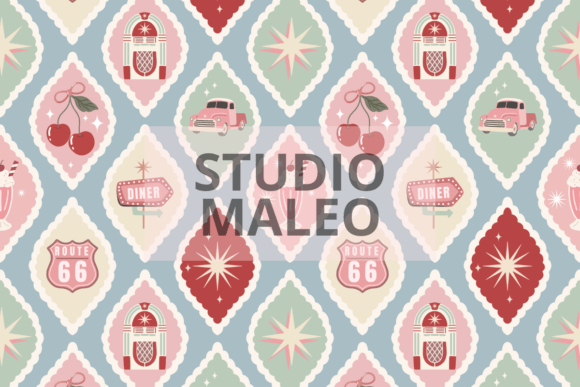
The visual language of mid-century America remains one of the most enduring and versatile aesthetic frameworks available to contemporary designers. Specifically, the Retro 1950s Diner Americana Pattern offers a distinct combination of nostalgia, vibrancy, and cultural storytelling that transcends simple decoration. This asset class typically features a curated collection of iconography including Route 66 signage, weathered pickup trucks, rockabilly cherries, and classic jukebox illustrations set against vintage diner backgrounds. For professionals ranging from graphic designers to small business owners, understanding the practical application and quality standards of these digital papers is essential for executing projects that require authenticity without appearing clichéd.
Defining the Aesthetic and Core Components
At its core, this pattern style is not merely a repetition of images but a cohesive thematic system. The Retro 1950s Diner Americana Pattern draws heavily from the post-war economic boom in the United States, a period characterized by optimism, automotive culture, and the rise of the roadside eatery. When evaluating a specific pack or design within this genre, one should look for a harmonious blend of specific elements. The inclusion of Route 66 signs serves as an immediate geographic and historical anchor, evoking the spirit of the open road. Similarly, the presence of old pickup trucks adds a layer of rugged utility that balances the polished chrome of the era.
The "rockabilly" influence is often represented through motifs like cherries, playing cards, or stylized typography, which injects a sense of rebellion and youth culture into the design. Meanwhile, the retro jukebox illustration acts as a focal point, symbolizing the musical heartbeat of the decade. A high-quality implementation of these elements ensures that they do not feel randomly pasted together but rather integrated into a seamless vintage 1950s Americana diner background. The color palette is equally critical; expect to see saturated reds, mint greens, checkerboard blacks and whites, and faded teals that mimic the look of aged print media or painted metal.
Practical Applications Across Industries
The utility of the Retro 1950s Diner Americana Pattern extends far beyond personal scrapbooking. For marketers and brand strategists, this aesthetic provides a powerful tool for evoking trust and warmth. A local bakery or burger joint might utilize these patterns on packaging, menu liners, or wall murals to establish an immediate connection with customers who associate the style with comfort food and community gathering spots. In the realm of textile design, these patterns translate effectively onto aprons, tablecloths, and even fashion items like scarves or dresses, offering manufacturers a ready-made theme that resonates with vintage enthusiasts.
Digital creators and web designers also find significant value in these assets. When used as a digital paper or website background, the pattern can break up the sterility of modern flat design, adding texture and personality to landing pages for events, music festivals, or heritage brands. However, the key to successful implementation lies in moderation. Using the pattern as a full-screen background on a text-heavy site may reduce readability; instead, it is often more effective when used in headers, footers, or as accent borders. For educators creating history materials, these visuals serve as accurate cultural artifacts that help students visualize the social atmosphere of the 1950s.
Assessing Quality and Technical Usability
When sourcing a Retro 1950s Diner Americana Pattern for professional use, technical specifications are just as important as artistic merit. The resolution of the digital file determines its viability for large-format printing. A pattern intended for textile wrap or large-scale wallpaper must be vector-based or available in high-resolution raster formats (typically 300 DPI or higher) to prevent pixelation. Lower quality files may appear acceptable on a screen but will fail disastrously when printed on physical merchandise.
Furthermore, the seamlessness of the repeat is a crucial indicator of quality. A poorly constructed pattern will show visible lines where the image tiles meet, disrupting the illusion of a continuous surface. Professional-grade assets ensure that the transition between tiles is invisible, allowing the vintage 1950s Americana diner background to cover any surface area uniformly. Flexibility is another factor; the best collections offer variations in colorways or element density, allowing the user to adapt the pattern to different lighting conditions or brand guidelines. For instance, a muted version of the pattern might be necessary for a sophisticated boutique, while a high-contrast version suits a lively event poster.
Strategic Value for Content Creators and Entrepreneurs
For freelancers and agency owners, having access to a reliable library of themed patterns streamlines the workflow. Instead of commissioning custom illustrations for every client request involving retro themes, a well-curated Retro 1950s Diner Americana Pattern package provides an immediate solution. This efficiency allows creators to focus on layout, typography, and strategy rather than spending hours drawing individual rockabilly cherries or retro jukebox illustrations. Moreover, consistency is vital for brand identity. If a client launches a product line with a 1950s theme, using a consistent pattern across their social media graphics, packaging, and website creates a unified brand experience that feels intentional and professional.
Small business owners in the hospitality sector can leverage these designs to enhance the physical atmosphere of their establishments. Applying these patterns to coasters, napkins, or even vehicle wraps for food trucks can turn a standard service into an immersive experience. The psychological impact of the Route 66 signs and old pickup trucks imagery taps into a collective memory of freedom and adventure, which can subtly influence customer perception and dwell time. However, entrepreneurs must ensure that the usage aligns with their specific brand voice; a tech startup might find this aesthetic too distracting, whereas a craft brewery or artisanal coffee roaster could find it perfectly aligned with their heritage-focused marketing.
Limitations and Considerations for Modern Use
Despite its popularity, the Retro 1950s Diner Americana Pattern is not without its limitations. The primary risk is over-saturation. Because the aesthetic is widely recognized and frequently used, there is a danger of the final product looking generic or kitschy if not executed with care. To avoid this, designers should consider mixing the pattern with modern typography or minimalist layouts to create a contemporary twist on the classic look. Additionally, cultural sensitivity is important; while the 1950s are often romanticized, it is beneficial to acknowledge the complexity of the era when using these motifs in educational or historical contexts.
Another consideration is the target audience. While the style appeals broadly to adults aged 20–50, younger demographics may perceive it as purely ironic or outdated unless it is recontextualized within a modern trend, such as the current resurgence of Y2K or neo-vintage styles. Therefore, understanding the specific demographic of the project is essential before committing to this visual direction. Furthermore, licensing terms must be carefully reviewed. Many high-quality patterns are available for personal use only, meaning commercial applications for products like textile wraps or sold merchandise may require an extended license.
Final Verdict on Long-Term Utility
In conclusion, the Retro 1950s Diner Americana Pattern represents a robust and flexible resource for a wide array of creative and commercial endeavors. Its strength lies in its ability to instantly communicate a specific mood and era through recognizable symbols like the jukebox, Route 66, and checkerboard floors. When selected with attention to resolution, seamlessness, and contextual appropriateness, these patterns offer long-term value that outlasts fleeting design trends. Whether used for scrapbooking memories, designing a restaurant's interior, or crafting a unique brand identity, this aesthetic continues to provide a rich visual vocabulary for those willing to apply it with thoughtfulness and precision. For professionals seeking to add character and historical depth to their work, investing in high-quality Americana assets remains a sound strategic decision.