Understanding the Rose Floral Seamless Pattern: A Guide to French Provincial Digital Textiles
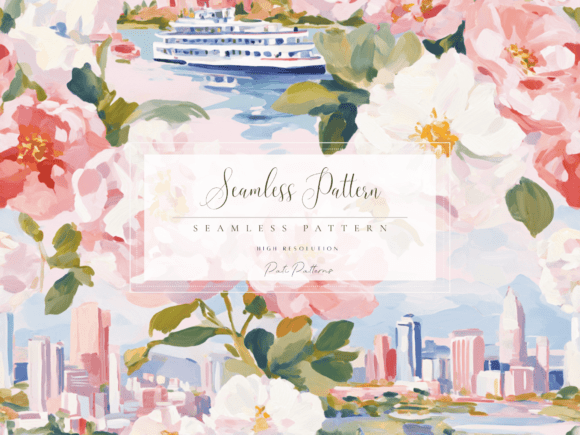
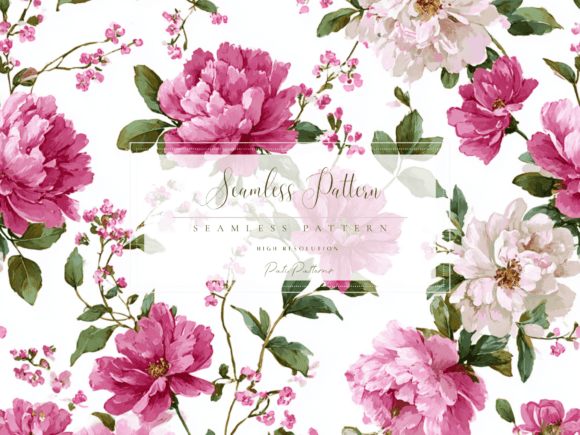
The Rose Floral Seamless Pattern represents a specific intersection of historical aesthetic and modern digital utility. Often categorized under the broader umbrella of cottagecore or vintage botanical designs, this style distinguishes itself through its adherence to French Provincial motifs. Unlike generic floral repeats that may rely on bold, saturated colors or rigid geometric arrangements, a high-quality rose floral seamless pattern prioritizes organic movement, soft watercolor textures, and a "toss" composition that mimics the randomness of a wild meadow.
For designers, crafters, and product creators, understanding the nuances of this design style is crucial when selecting assets for commercial or personal projects. The distinction lies not just in the subject matter—roses and foliage—but in the execution of the repeat, the color theory employed, and the intended atmospheric effect. This guide evaluates the characteristics of these patterns, compares them to alternative styles, and outlines practical considerations for integrating them into various media.
Defining the Aesthetic: French Provincial and Cottagecore Influences
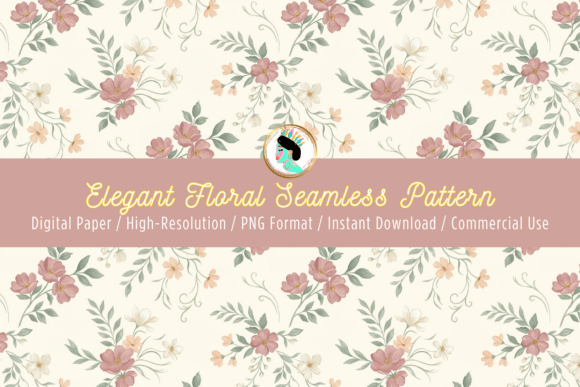
At its core, the Rose Floral Seamless Pattern discussed here draws heavily from the French countryside tradition. This is characterized by a refined elegance that avoids the clutter often found in maximalist vintage designs. The visual language relies on "airy botanical movement," where elements like soft wild roses, meadow blossoms, and fine leafy sprays are spaced deliberately to create breathing room within the composition.
The color palette is a defining feature. Rather than the primary reds and greens of traditional holiday florals, this style utilizes a muted, sophisticated spectrum. Expect to see dusty rose, muted sage, pale peach, cream white, and soft greens set against a warm, soft ivory background. This desaturated approach allows the pattern to function as a texture rather than a dominant graphic, making it versatile for backgrounds, textiles, and stationery where readability and subtlety are paramount.
The technique often simulates watercolor or gouache, providing a hand-painted feel that digital vector art sometimes lacks. This textural quality adds depth, creating a perception of luxury and artisanal craftsmanship even when the file is a digital download. For users seeking a "romantic meadow" vibe, this specific rendering style is non-negotiable; a flat vector version of the same flowers would fail to capture the necessary emotional resonance.
Seamless Repeats vs. Spot Illustrations: Technical Considerations
When evaluating digital paper or textile designs, one of the first decisions involves the format: seamless repeating patterns versus spot illustrations. The Rose Floral Seamless Pattern is engineered specifically for continuity. In a seamless file, typically delivered at high resolutions like 4096 x 4096 pixels, the edges align perfectly so that the image can be tiled indefinitely without visible breaks or seams.
This technical attribute makes it superior for applications requiring large surface coverage. If you are designing fabric for a dress, wallpaper for a nursery, or wrapping paper rolls, a seamless pattern is the only viable option. It ensures that the floral distribution remains consistent regardless of the dimensions of the final print. In contrast, spot illustrations or non-repeating digital papers are better suited for discrete elements, such as a central motif on a greeting card or a specific embellishment in a junk journal.
However, the seamless nature does introduce a constraint: the scale of the repeat. A "toss repeat" composition, where elements are scattered naturally, can sometimes reveal its grid structure if the repeat unit is too small or if the arrangement is too uniform. High-end designs mitigate this by using larger canvas sizes and complex layering, ensuring that the eye travels across the surface without detecting the underlying tile structure. When reviewing potential assets, always check the preview of the tiled pattern to ensure the flow feels natural and not mechanically repetitive.
Comparative Analysis: Watercolor Styles vs. Vector and Photographic Options
In the marketplace of digital assets, the Rose Floral Seamless Pattern competes with several other stylistic approaches. Understanding the trade-offs between these styles helps in selecting the right resource for a specific project goal.
- Watercolor/Gouache (The Subject Style): As described, this offers softness, texture, and an organic, hand-crafted feel. It excels in wedding stationery, boutique branding, and home decor where warmth and nostalgia are desired. The limitation is that it is raster-based (pixels), meaning scaling up beyond the original resolution (e.g., 4096 px) can result in pixelation.
- Vector Florals: These are mathematically defined lines and shapes. The primary advantage is infinite scalability; a vector rose can be printed on a business card or a billboard without quality loss. However, vectors often lack the subtle color blending and textured brushstrokes of the French Provincial watercolor style, potentially appearing flatter or more "corporate."
- Photographic Patterns: These use actual photographs of flowers arranged in a repeat. While hyper-realistic, they can sometimes feel heavy or visually noisy compared to the airy, painted aesthetic of the cottagecore style. Photographs also present challenges in color matching for print, whereas illustrated palettes are pre-curated for harmony.
For projects emphasizing a "soft breathable spacing" and a "refined toss repeat," the watercolor approach remains the industry standard. It bridges the gap between realism and artistic interpretation, offering the best of both worlds for romantic and vintage-themed endeavors.
Application Versatility: From Textiles to Digital Products
The utility of a high-resolution Rose Floral Seamless Pattern extends far beyond simple digital scrapbooking. Because the design balances luxury aesthetics with functional spacing, it serves as a robust foundation for various commercial and creative outputs.
In the realm of textile design, this pattern is ideal for sewing fabrics used in quilting, apparel, or home furnishings like curtains and cushion covers. The muted color palette ensures that the fabric pairs well with solid colors and other prints, a critical factor for quilters and fashion designers. Similarly, for sublimation products and print-on-demand items, the high DPI (dots per inch) of a 4096 px file ensures crisp printing on mugs, tote bags, and pillows without blurring.
Digital applications are equally vast. Web designers might use these patterns as subtle background textures for lifestyle blogs or e-commerce sites focusing on handmade goods. Planners and journal enthusiasts utilize these designs for printable covers and interior pages, where the "elegant vintage" look enhances the user experience without distracting from writing space. Furthermore, the pattern serves as an excellent resource for branding and packaging, particularly for businesses in the beauty, wellness, or bridal sectors that wish to convey a sense of timeless femininity.
Decision Factors: When to Choose This Style
Selecting the right digital asset requires aligning the design's characteristics with your project's objectives. The Rose Floral Seamless Pattern is the optimal choice when:
- Mood is Paramount: Your project requires an immediate evocation of romance, nostalgia, or tranquility. The specific combination of dusty rose and sage green triggers these associations more effectively than brighter or cooler palettes.
- Texture is Needed: You are working on a medium that benefits from the illusion of depth, such as fabric or high-quality cardstock, where the watercolor grain adds tactile value.
- Versatility is Key: You need a background that supports text overlay. The airy composition and light ivory background of this specific style provide excellent contrast for typography, unlike denser floral prints.
Conversely, this style may not be the best fit if your brand identity relies on bold, modern minimalism, high-contrast graphics, or neon color schemes. Additionally, if your project requires extreme enlargement beyond the provided 4096 px limit for large-format signage, a vector alternative might be a safer technical choice, despite the aesthetic trade-off.
Evaluating Quality in Digital Downloads
Not all seamless patterns are created equal. When sourcing a Rose Floral Seamless Pattern for commercial use, several quality indicators should guide your evaluation. First, verify the resolution. A file size of 4096 x 4096 pixels is generally considered high-resolution for most print-on-demand and crafting needs, but professional textile printing may sometimes demand even larger tiles or specific file formats like TIFF.
Second, examine the seamlessness critically. Download the preview or test tile the image in your software. Look for "ghosting" or visible lines where the pattern repeats. A well-engineered toss repeat will hide these junctions effectively. Finally, review the licensing terms. While many digital papers include commercial use, restrictions may apply regarding the number of end products or the requirement to alter the design before resale. Ensuring the license aligns with your business model is as important as the visual appeal of the pattern itself.
By carefully considering these aesthetic, technical, and legal factors, creators can leverage the Rose Floral Seamless Pattern to produce work that is not only visually stunning but also professionally executed and fit for purpose.